Squirrel and Raccoon Exclusion: One-Way Doors vs. Fixed Screening
A wire door on a roof opening and a fixed screen over a vulnerable area may look similar from the ground. They have different purposes. Understanding that difference helps homeowners ask useful questions when squirrels or raccoons have accessed a building.
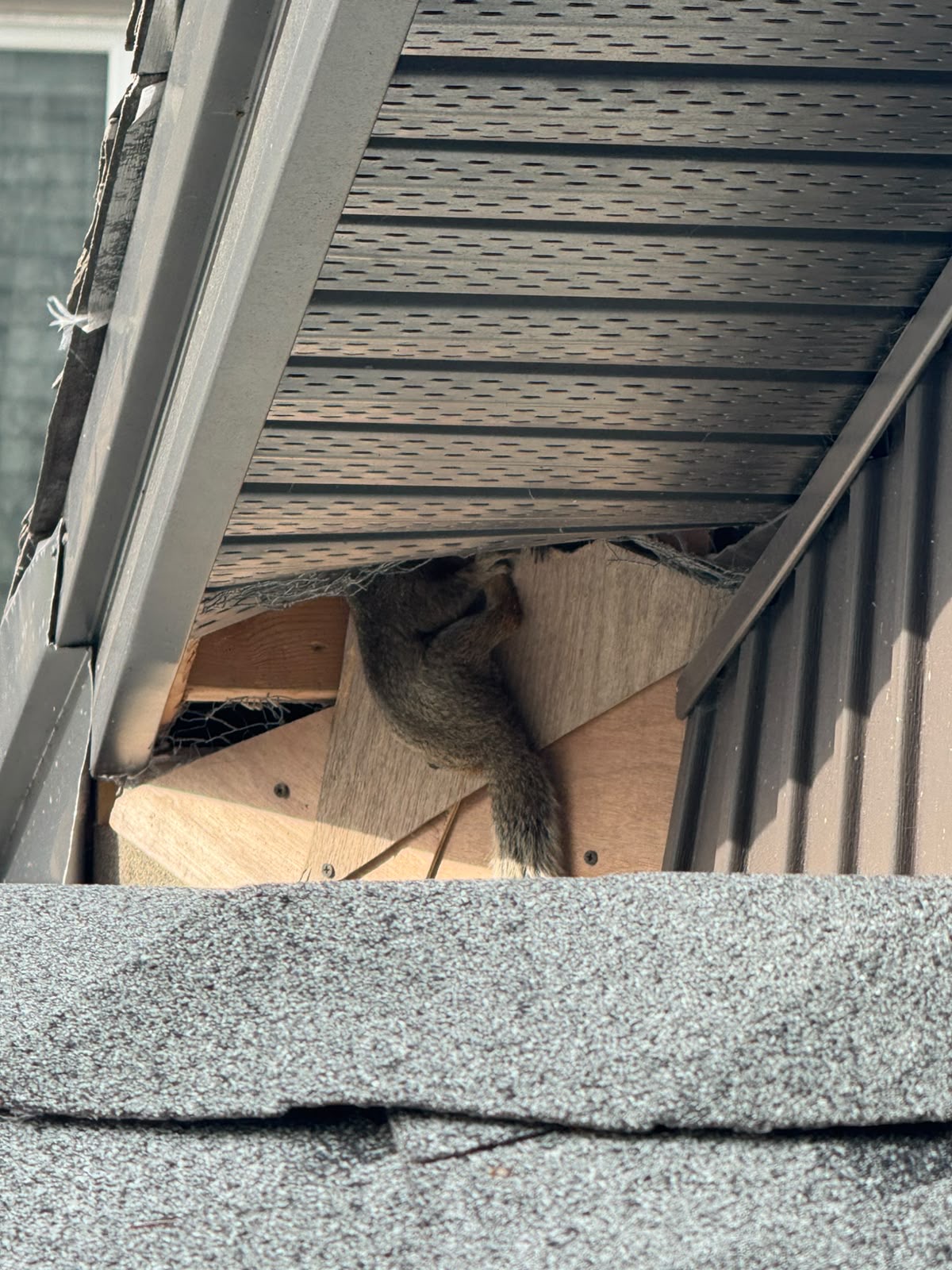
The real work photographs below show a squirrel at a soffit opening and examples of exclusion equipment. They illustrate visible conditions and hardware, rather than a claim that every image comes from one property or involves the same animal.
Identify the animal before choosing equipment
Both squirrels and raccoons can use openings around a roofline. A hole alone does not identify its occupant, and the size or timing of a noise is not enough to settle the question. An inspection should connect the signs of activity with the building’s accessible openings.
Tell the technician what you have actually seen and where you heard movement. Photograph exterior activity only from a safe position. Leave roof access, attic hazards and close contact with animals to the appropriate professional.
A one-way door is part of an active removal plan
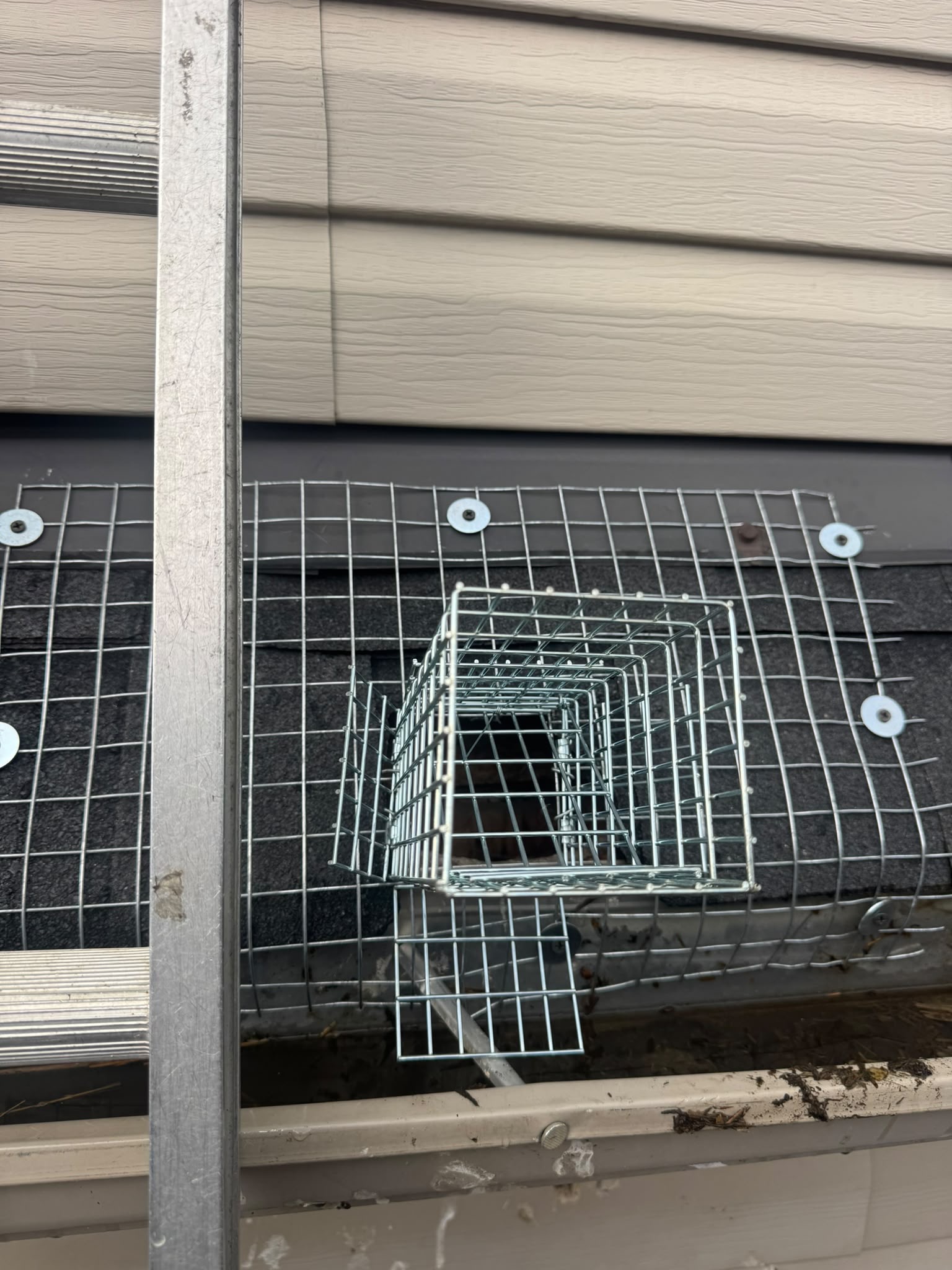
A suitable one-way door allows an animal to leave while restricting its return through that route. It is not appropriate to install one without first considering the species, the opening and any dependent young. An adult leaving does not mean babies can follow.
Humane World for Animals discusses this concern in its guidance on squirrels and raccoons. Ask how the inspection accounts for young and how the proposed method will avoid separating a family.
Fixed screening serves a different purpose
Fixed screening protects an opening rather than providing an exit. Screening around an active device can help direct movement through the planned route. Once removal has been verified, the technician can explain when temporary equipment will come off and how the final opening will be closed.
Materials and installation must suit the building component. Wildlife work should not obstruct required ventilation or compromise weather protection. A chimney or combustion-related opening needs an appropriate, professionally assessed solution; a photograph of mesh elsewhere is not a do-it-yourself specification.
Do not change the setup between visits
Do not block a suspected entry, move a door or cover a device because the house has become quiet. Report new noises, visible damage or an animal repeatedly attempting to enter. Ask the technician whether these observations change the plan.
Before approving work, clarify the inspection findings, the purpose of each piece of equipment, the follow-up arrangements and which building repairs are included. Keep photographs and the written scope so you can compare the proposed work with the completed result.
Get help with squirrels or raccoons
Read about Empire’s squirrel removal and raccoon removal services. Local wildlife service information is available for Oshawa, Vaughan and Richmond Hill. Call (416) 831-0386 to discuss an inspection.