Why Squirrels Move Into York Region Attics in Fall
Autumn can bring scratching above a ceiling as squirrels investigate roof openings and sheltered attic space. Empire Wildlife Pest Control inspects squirrel activity in York Region, including Markham, Vaughan, Richmond Hill, Newmarket and Aurora. We identify the active opening, assess whether young are present, explain a humane removal plan and quote suitable repairs. If you hear activity, call (416) 831-0386 for a free quote.
Why a roof can look inviting in fall
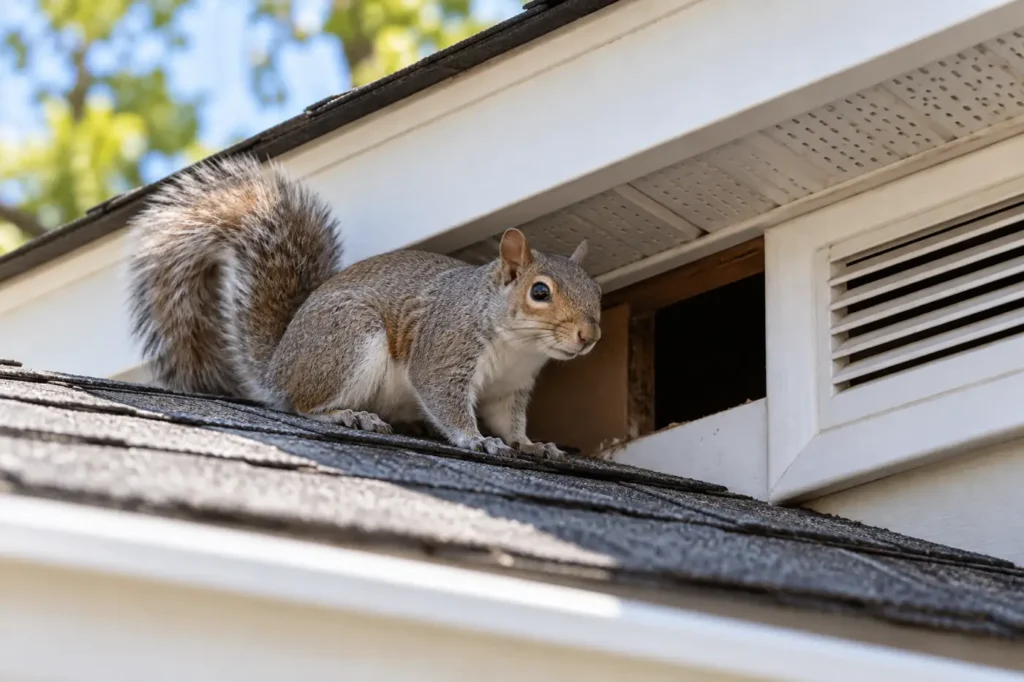
Squirrels are active around trees, roofs and yard food sources through autumn. An attic offers shelter from wind and rain, and a loose vent cover or damaged soffit can make access easier. A squirrel may investigate an opening repeatedly before a homeowner notices any sound inside. The presence of trees near a roof can help an animal reach the building, but it does not prove that a particular tree is the cause. The occupied opening has to be found during an inspection.
Changes around the house may make an existing weak point more obvious. A storm can loosen a vent cover. Roofing work can expose a gap. A deck or nearby branch may provide another route to a vulnerable roof edge. The right response is to check the building from a safe position and arrange an inspection, rather than assuming that a noise comes from the first gap you can see.
Signs that a squirrel may be using the attic
Homeowners often report quick scratching, running or chewing sounds above a ceiling, especially around the start and end of the day. You may also see an animal repeatedly travelling to one roof corner, displaced material around a soffit, or a damaged vent screen. These clues help a technician focus the inspection, but sound alone cannot identify a species. Raccoons, birds and rodents can also enter buildings and need different plans.
Do not climb on the roof to investigate. If you can safely take a picture from the ground, note the location and the time you noticed activity. Tell the technician whether noises are confined to one area, whether you have seen an animal enter, and whether there are signs in a living space. This information makes the first visit more useful.
Why the first step is an inspection
A squirrel exclusion should address an active opening without trapping an animal inside. Our technician looks for evidence of activity, checks accessible openings and considers whether dependent young may be present. The timing of breeding varies, so an autumn call still deserves an assessment rather than a blanket assumption. We explain the proposed removal method, the openings that need attention and any work outside the scope of wildlife service before proceeding.
Where conditions allow, a one-way door lets an adult leave and prevents re-entry through the active opening. If young are present, the method changes so they can be handled carefully and reunited with their mother. We do not use poison for wildlife removal. See our squirrel removal service for more detail on inspection, humane exclusion and follow-up.
Repairing the opening after the animal is out
Closing an opening too early can leave an animal or its young inside. After the occupied space is clear, suitable vent, soffit or roof-edge openings can be screened or repaired. The materials and scope depend on the building and ventilation needs. A technician can point out nearby weak spots; a roofing or construction specialist may be needed for unrelated structural repairs. Our wildlife damage repair page explains the screening and exclusion work we assess.
Ask what the quote includes: the active opening, any other vulnerable openings, the kind of screening, and how the completed work will be checked. Photos of the area before and after may help you understand the repair. Keep an eye on the same roof corner afterward, and report new activity rather than assuming that every later roof visit means an animal is inside.
York Region homes have different access points
In Markham, a newer subdivision home may have roof vents and soffit junctions to inspect. In Vaughan, both newer houses and wooded properties can have different roof edges and nearby access routes. Richmond Hill includes mature trees and homes near the Oak Ridges area. These are examples of building conditions to assess, not proof of wildlife at a particular address. The same inspection approach applies in Newmarket, Aurora and elsewhere in York Region.
Store accessible food securely, maintain exterior covers and arrange repairs when a vent or soffit becomes loose. Those steps reduce opportunities, but they do not replace identification and removal when activity is already inside. If the noise sounds heavier or you see a larger animal, review our raccoon removal page and describe the signs when you call.
Questions homeowners ask
Should I close a soffit gap myself?
Do not close a suspected active entrance before an inspection. An animal or its young may be inside. A technician can assess the opening and recommend the sequence for exclusion and repair.
Does every scratching sound mean squirrels?
No. The timing and location are clues, but rats, mice, birds and other wildlife may make similar sounds. Identification helps avoid the wrong treatment.
Can you visit after hours?
Empire Wildlife Pest Control is open 24 hours, 7 days a week. Call (416) 831-0386 to discuss the issue and the earliest available appointment; same-day and emergency visits are available subject to scheduling.
Hearing squirrels above the ceiling? We serve York Region, Durham Region and Toronto. Request a free quote or call (416) 831-0386.