
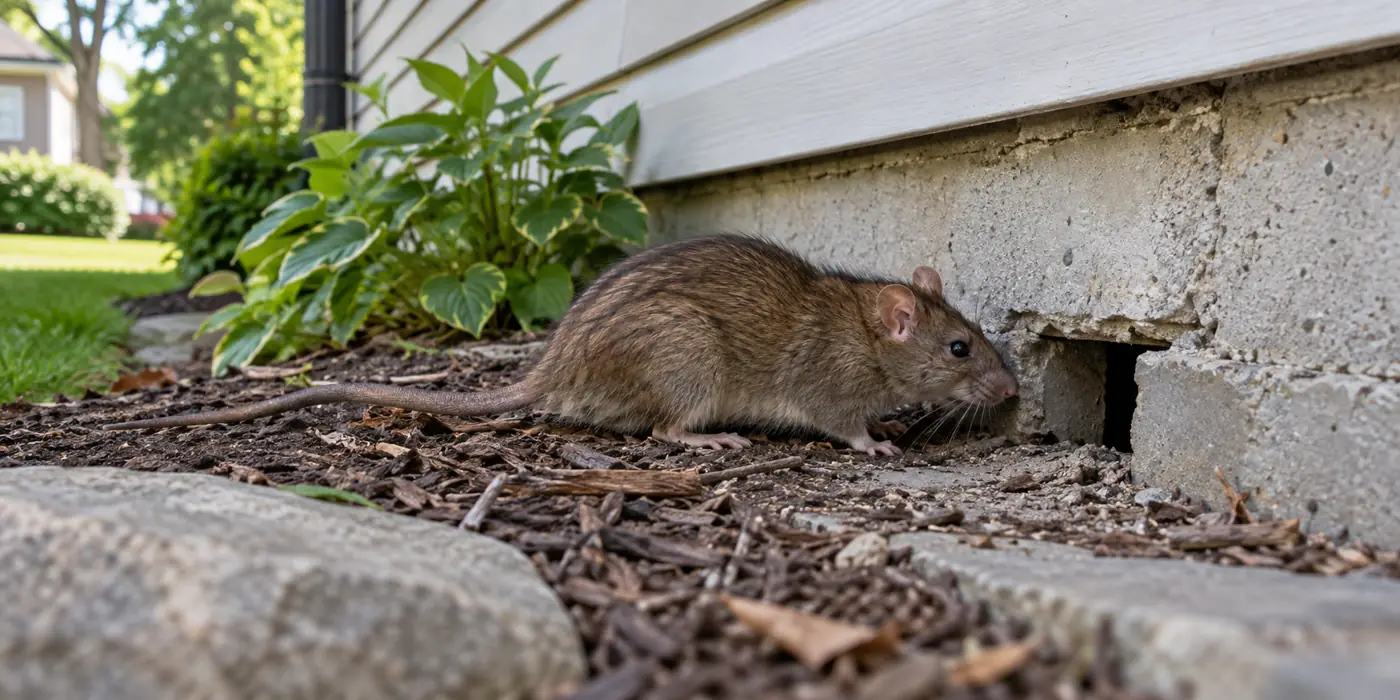
Signs You May Have Rats
Scratching after dark, droppings, gnawed packaging, rub marks along walls and damaged insulation can point to rodents. Rats can use small gaps around foundations, vents and utility penetrations. The signs also overlap with mice and other animals, so an inspection matters before choosing a treatment.Our Rat Control Process
- Inspect: We identify activity, likely travel paths and the openings that need attention.
- Control: We explain the recommended treatment for the building and the people or pets using it. Rodent control methods differ from one-way wildlife doors.
- Entry-point recommendations: Our technician identifies accessible openings and recommends where sealing may help. We provide a quote for any proposed sealing after assessing the active rat issue.
- Follow up: We share sanitation and storage steps that can reduce food and shelter.
Damage Repair and Prevention
Rats may chew insulation or wiring and contaminate stored items. Avoid disturbing droppings without proper protection. If you need vent screening or entry repair, see our damage repair and prevention service. For smaller rodent signs, compare our mouse removal page; attic noises may also call for squirrel inspection.When Rat Activity Needs a Professional Inspection
A single sighting does not tell you how many rats are present or where they are entering. Rats often move along sheltered edges and may travel through spaces that are difficult to see from a living area. A technician can compare droppings, gnaw marks and travel routes with the condition of the exterior, basement and utility areas. That inspection helps separate an active opening from an old or unrelated gap. It also helps us recommend a treatment plan suited to the property instead of assuming every opening needs the same repair.
If you find droppings in a kitchen, pantry or storage area, keep food in closed containers and avoid leaving pet food out overnight. Do not sweep or vacuum dry droppings. Ask the technician how to clean the affected area safely. Where wiring appears damaged, arrange for an appropriate electrical assessment. These steps support control work, but they do not replace finding the source of activity.
What Happens After the First Visit?
We explain which signs we found, where activity appears concentrated and what the next steps involve. The treatment and follow-up schedule depend on the building and the extent of the problem. We also point out accessible gaps, door sweeps, vents or utility penetrations that may deserve attention. Some openings can be addressed during a repair visit; others may require a different trade or a change to the building. The technician recommends where sealing may help, then quotes any proposed entry work after assessing the active rat issue. You can review that scope before deciding on repairs.
Prevention also depends on food and shelter. Keep outdoor bins closed, manage spilled birdseed and store goods off the floor where practical. Trim vegetation that conceals the foundation and report any new droppings or sounds during follow-up. Because neighbouring buildings and site conditions differ, no inspection can promise that every future rodent route is eliminated. We focus on the active problem and give you specific recommendations for your property.